
Get 3 logbook hours for every 1-hour structured lesson, up to the NSW bonus limit.
One of the most common questions learner drivers ask is: “Does Service NSW Supply a Car for Your Driving Test?”
The answer is no. They don’t provide a car for your driving test. But don’t worry i have compiled a guide for you to help in this issue.
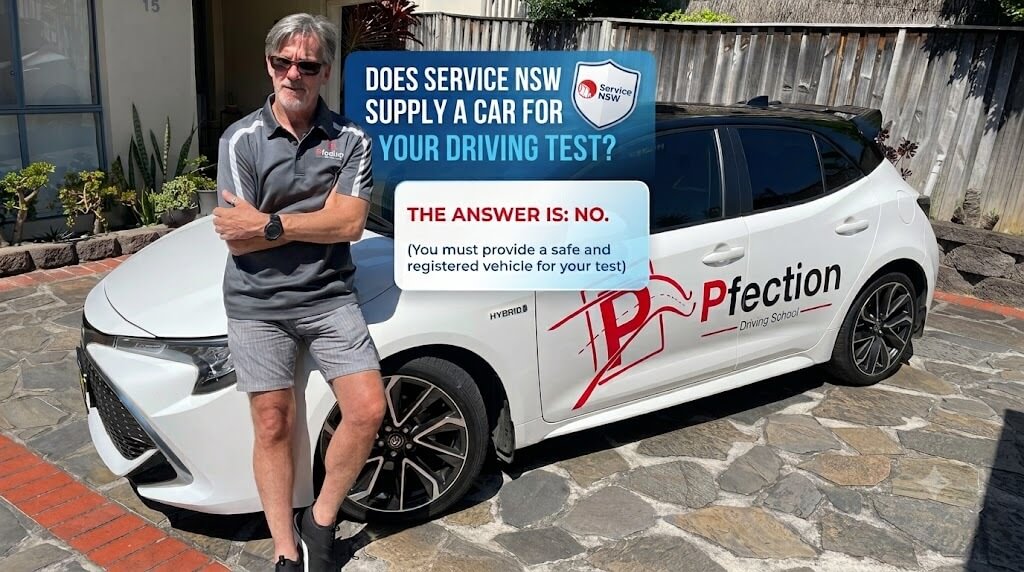
Service NSW does not supply a vehicle for your practical driving test. You are responsible for arriving with a suitable, registered and roadworthy vehicle.
NSW Government guidance states that the testing officer will inspect the vehicle before the test. The car must have working lights, legal tyres, seatbelts, headrests, mirrors and an undamaged windscreen. It must also be clean, safe and free from unsecured items. (NSW Government)
If the vehicle does not meet the required standard, your test may be cancelled. You may then lose your booking fee and need to pay to book another test (Service NSW). So, what car should you use for your driving test?
Option 1: Use Your Driving Instructor’s Car for NSW Driving Test
For most learner drivers, using their driving instructor’s car is the best and least stressful option.
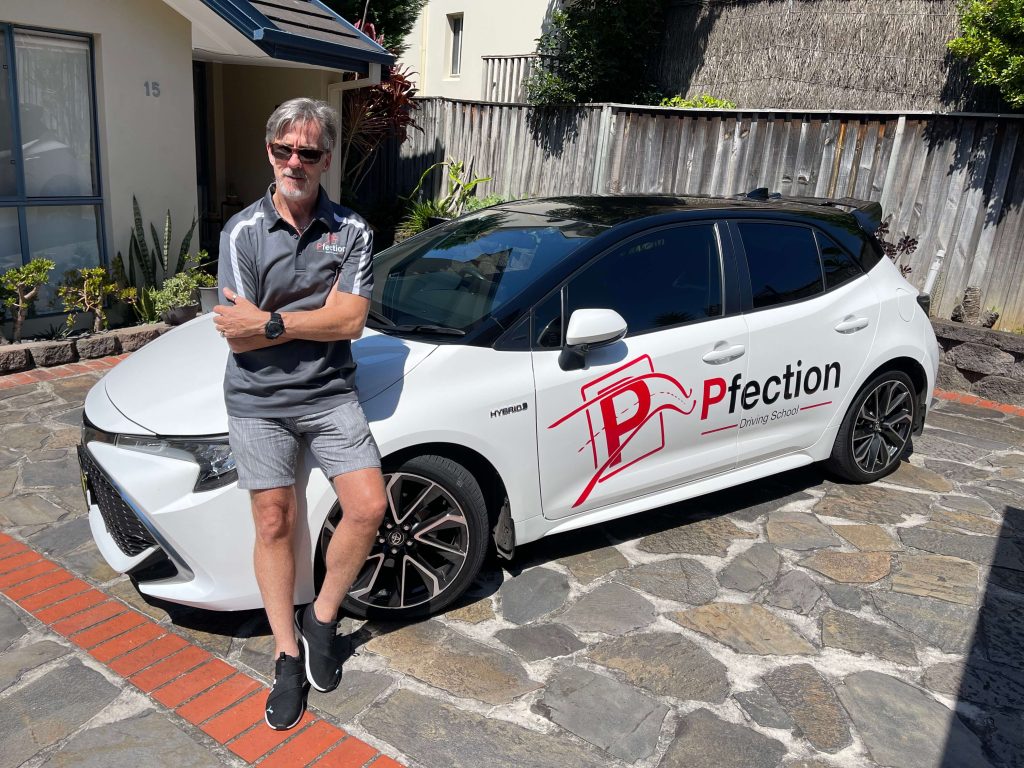
You already know the car
If you have completed your driving lessons in your instructor’s car, you will already be familiar with:
- the accelerator and brake response
- the steering
- the mirrors and visibility
- the indicator and wiper controls
- the vehicle’s size and turning circle
- the reverse camera and parking sensors
- the seat and steering-wheel position.
The driving test is not the ideal time to learn how a different car feels.
Even small differences in steering sensitivity, brake pressure or visibility can affect your confidence and decision-making. Driving the same vehicle you used during your lessons allows you to concentrate on the road and the testing officer’s directions rather than adjusting to an unfamiliar car.
Instructor vehicles are regularly checked
A professional driving instructor depends on their vehicle every day.
The car is generally maintained, cleaned and checked regularly to ensure important items such as the following are working correctly:
- headlights and brake lights
- indicators
- tyres
- mirrors
- seatbelts
- windscreen wipers
- horn
- registration
- safety equipment.
This greatly reduces the chance of your test being cancelled because of a faulty light, damaged tyre or another vehicle problem.
You can complete a pre-test lesson
When you book your instructor’s car for the test, you can usually arrange a lesson immediately beforehand.
A pre-test lesson gives you time to:
- settle your nerves
- practise the manoeuvres you may be asked to complete
- review observation checks
- correct any last-minute mistakes
- become comfortable with the traffic conditions
- arrive at the testing centre prepared and focused.
Your instructor can also make sure you arrive early, park in the correct testing area and have the necessary documents ready.
Dual controls provide additional safety
Driving instructor vehicles are fitted with approved dual controls.
The testing officer will conduct the assessment, and your instructor will not be in the car during the test. However, using a properly equipped instructor vehicle provides an added level of safety and reassurance before and after your assessment.
Your instructor can drive you home if necessary
You must attend the test with someone who holds a full driver licence. If you do not pass, you cannot legally drive away from the testing centre by yourself. (NSW Government)
When you use your instructor’s car, this is already taken care of. Your instructor can drive you home or to your next destination regardless of the result.
Option 2: Use Your Own Car or a Family Car
You are allowed to use your own vehicle or a family member’s vehicle, provided it is registered, roadworthy and suitable for the test.
This may be a reasonable option when:
- you have completed most of your practice in that car
- you feel completely comfortable driving it
- the vehicle has been carefully checked
- a fully licensed driver can accompany you to the test
- the vehicle is appropriately insured.
Before the test, check:
- registration
- tyre condition and tread
- brake lights
- headlights
- indicators
- number plate lights
- windscreen and mirrors
- seatbelts and headrests
- windscreen wipers
- horn
- dashboard warning lights
- doors and windows
- loose items inside the car.
Do not assume the car is acceptable simply because it is driven regularly.
A faulty globe, damaged mirror, windscreen crack, warning light or unsafe tyre could prevent the test from proceeding.
The disadvantage of using a family car
Even when a parent’s or family member’s car is roadworthy, it may not be the vehicle in which you received professional instruction.
You may be accustomed to driving it casually with a family member but have developed habits that could affect your test, including:
- incomplete observation checks
- weak head checks
- incorrect positioning
- rolling stops
- inconsistent speed control
- relying too heavily on parking sensors or cameras.
A qualified instructor can identify these issues before your test.
Option 3: Hire a Rental Car
Hiring a vehicle from a rental company may be possible, but it is generally the least suitable option.
You may be unfamiliar with the vehicle
A rental car may have different:
- steering and braking
- controls
- visibility
- dimensions
- safety systems
- parking features.
Trying to adjust to these differences immediately before a driving test can create unnecessary pressure.
Rental restrictions may apply
Some rental companies may not allow their vehicles to be:
- driven by learner drivers
- used for driving tests
- driven by someone below a particular age
- driven without being specifically listed on the rental agreement.
Insurance restrictions or additional excesses may also apply.
Never assume a rental vehicle can be used for a driving test. You must obtain clear approval from the rental company and carefully check the rental and insurance conditions beforehand.
Vehicle availability is not guaranteed
The exact make or model you book may not be the vehicle you receive.
This means you could arrive on test day and be given a vehicle you have never driven before. That is far from ideal when you are already dealing with the normal nerves of a driving test.
Our Recommendation
For most learners, the best order of preference is:
1. Your driving instructor’s car
The safest, easiest and most familiar option.
2. Your own car or a familiar family car
Suitable when you know the vehicle well and have checked that it is completely roadworthy.
3. A rental car
Only consider this when the rental company gives permission and you have enough time to become familiar with the vehicle.
Set Yourself Up for the Best Possible Test
Passing your driving test requires safe driving, good decision-making and consistent observation.
You do not need the additional worry of an unfamiliar vehicle or a test being cancelled because a light, tyre or seatbelt does not meet the required standard.
Using your instructor’s car allows you to:
- drive a vehicle you already know
- complete a final pre-test lesson
- reduce unnecessary nerves
- avoid many vehicle-roadworthiness concerns
- arrive at the testing centre properly prepared
- have a fully licensed instructor available after the test.
At Pfection Driving School, we help learners prepare for the complete driving-test experience—not only the test route.
Our pre-test lessons and test-day car packages are designed to help you arrive calm, confident and ready to demonstrate safe driving.
Preparing for your driving test in the Sutherland Shire or Georges River area?
Contact Pfection Driving School to discuss a pre-test lesson and the use of our instructor vehicle for your driving test.