
Get 3 logbook hours for every 1-hour structured lesson, up to the NSW bonus limit.
By Shane McIntyre, Pfection Driving School
When I bring someone into Pfection, I’m looking for more than driving experience. I want someone who is patient, easy to talk to and genuinely interested in helping people learn.
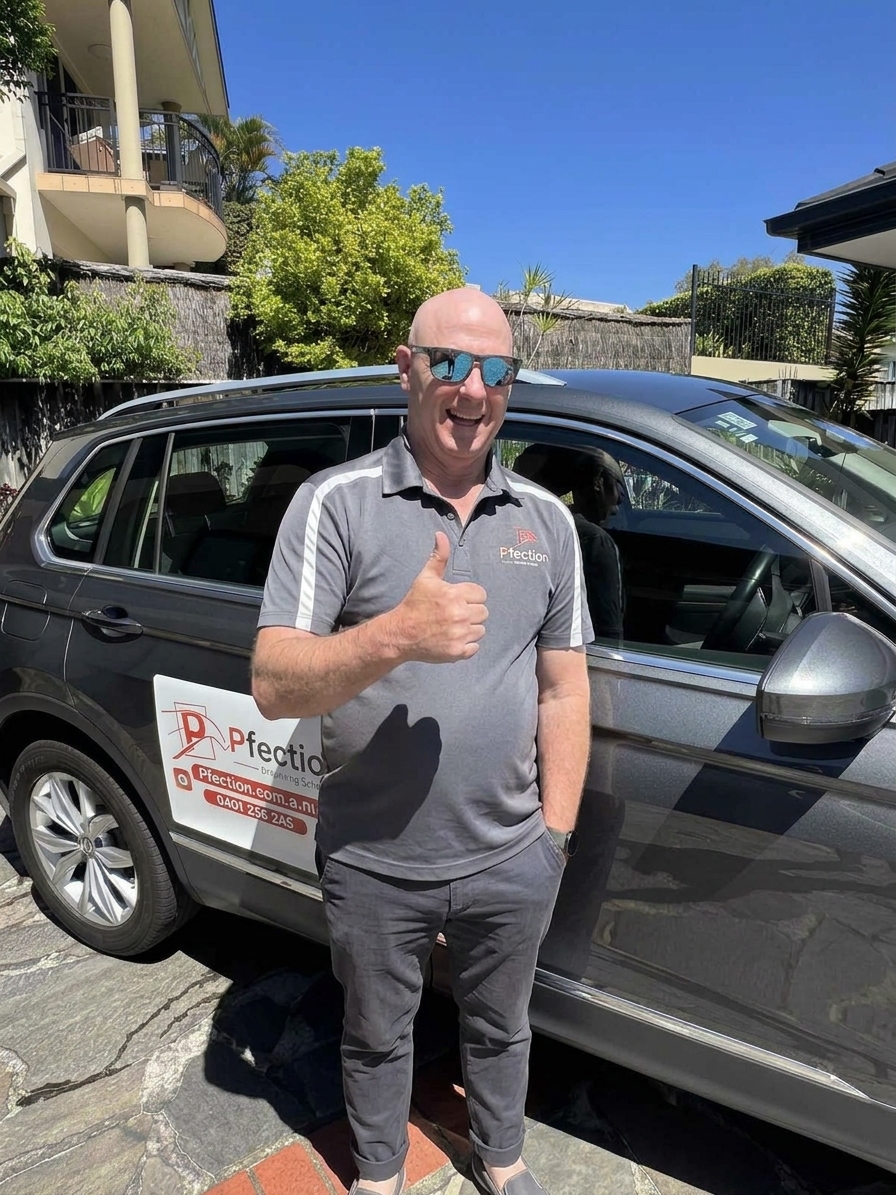
That’s why I’m pleased to welcome Marc Kannengiesser to our team.
Marc is a Sutherland Shire local with nearly 40 years of driving experience. He previously spent 24 years in law enforcement, with a background that includes frontline road safety and emergency response work.
That experience brings a valuable perspective to everyday driving. Just as importantly, Marc has a friendly, calm nature and works well with young people, including those with ADHD and other disabilities.
For me, it’s this combination that matters. Experience is useful, but a learner needs someone who can explain things clearly, recognise when they need more support and help them build confidence at an appropriate pace.
Here’s how Marc’s background can contribute to that learning experience.
Turning road experience into practical lessons
Knowing how to drive and knowing how to teach someone else are two different things.
At Pfection, we want experience to translate into something useful for the person behind the wheel. That means explaining what to look for, why a decision matters and how to approach a situation safely.
Marc’s former work gives him a practical understanding of road safety and the responsibilities that come with driving. Our focus is on bringing that perspective into ordinary situations learners will encounter every day.
It might be approaching a busy intersection, judging a gap in traffic or recognising that a situation needs a little more caution.
We’re not teaching emergency response driving or specialist manoeuvres. We’re helping people develop the awareness and judgement they need for their own everyday driving.
Learning to read the road ahead
There is more to driving than watching the vehicle directly in front of you.
Hazard perception means recognising something that could become dangerous and responding appropriately. Looking ahead and scanning the surrounding road environment give drivers an opportunity to notice developing problems earlier. These are key skills described in the NSW Hazard Perception Handbook. NSW Government
Imagine approaching a driveway partly hidden by a parked van.
The lesson isn’t simply, “Watch that van.” It’s helping the learner consider what they cannot see. Could a vehicle come out of the driveway? Could a pedestrian step into view? Does the approach leave enough time to respond?
Those are the kinds of questions we want learners to become comfortable asking themselves.
Marc’s road safety background provides useful context for these discussions. The aim is to explain what an experienced driver is noticing, rather than assume a beginner already sees it.
We want students to understand a situation, not simply wait for an instruction.
Understanding why speed, space and timing matter
A learner might know they should leave a safe following distance without fully understanding how that space helps them.
The gap ahead gives a driver time to recognise a problem, decide what to do and respond. NSW guidance also explains the importance of allowing more space in poor conditions, including wet weather and reduced visibility. NSW Government
In a lesson, we can turn that principle into something practical.
What happens when another vehicle moves into the gap ahead? How should the learner adjust when traffic starts slowing? Are they watching far enough ahead to notice the change?
These are useful teaching moments because they connect a safety principle with what is happening outside the windscreen.
Marc brings a relevant perspective to explaining why these decisions matter. The focus is on making sensible adjustments early, rather than relying on a sudden reaction.
A calm approach without lowering expectations
Marc’s friendly nature is an important part of what he brings to Pfection.
I want our learners to feel comfortable asking a question, admitting they’re unsure or saying that they need something explained again.
That doesn’t mean avoiding honest feedback. It means giving feedback in a way that helps someone understand what to improve.
A learner should leave a lesson knowing what went well, what still needs practice and what they are working towards next.
For nervous beginners, our approach is to introduce skills in manageable stages. For someone with more experience, we can focus on the situations or habits that need attention.
We take the responsibility of driving seriously, but lessons do not need to feel intimidating. We want them to be practical, encouraging and enjoyable.
Support for different learning needs
Marc works well with young people, including those with ADHD and other disabilities.
At Pfection, we start by getting to know the individual. We don’t assume that a diagnosis tells us everything about how someone learns or what support they need.
Some learners prefer a short explanation followed by practice. Others want to understand the whole task before attempting it. Some may need a skill broken into smaller steps or revisited across several lessons.
Our starting questions are straightforward: What helps you learn? What are you finding difficult? Is there anything you would like us to understand before we begin?
Marc’s patience and approachable manner are valuable qualities in those conversations.
The aim is to adapt the instruction where appropriate while keeping safety expectations clear.
Please speak with us before booking about any particular learning, accessibility or vehicle requirements. That gives us an opportunity to understand your needs and confirm whether our lessons and vehicle are suitable.
Knowing what to do around emergency vehicles
An approaching siren can leave a new driver wondering what to do first.
Where is the vehicle coming from? Are they in its path? Is there somewhere safe to move?
NSW guidance requires drivers to keep clear of an approaching emergency vehicle displaying flashing lights or sounding a siren, and to move out of its path as soon as they can safely do so. Separate rules apply when passing stationary emergency and breakdown vehicles with flashing lights. Transport for NSW
These are worth discussing before a learner encounters them unexpectedly.
Marc’s emergency response experience gives him useful context for explaining the importance of awareness and predictable behaviour around an incident.
The lesson is about understanding your responsibilities as an ordinary road user. We want learners to think clearly about what is happening and respond safely, rather than feel pressured into a rushed decision.
Local knowledge that helps learners build wider skills
As a Shire local, Marc knows the area and brings substantial experience on the road.
Local familiarity can help us plan lessons around a learner’s stage of development, beginning with suitable environments and introducing more demanding situations as they are ready.
However, our goal goes beyond helping someone become comfortable on familiar streets.
We want learners to understand how to approach an intersection they haven’t seen before, assess an unfamiliar road and make decisions without depending on a memorised route.
During lessons, the useful question is not only, “Do you know what happens here?”
It is also, “How would you work out what to do somewhere new?”
That is the kind of independence we want to develop.
Benefits for adults and drivers returning to lessons
This approach isn’t only for teenagers.
An adult learning to drive may want patient guidance without feeling embarrassed about starting later. Someone returning to driving may want to revisit particular skills. Another driver might be comfortable in quiet streets but want help with busier traffic or changing lanes.
We begin with the person’s experience and goals, rather than assuming everyone needs the same lesson.
Marc’s calm manner and road experience are useful qualities for that approach. The conversation starts with what you want to work on and what would help you feel better prepared.
There is no need to pretend you are confident in a situation that still concerns you. That is something we can discuss and work towards during lessons.
Preparing for the driving test and what comes after
Of course, we want our learners to be well prepared for their driving test. It is an important milestone.
The NSW Driving Test assesses practical driving skills, including hazard awareness, decision making and how an applicant shares the road with other people. NSW Government
Those are also the skills we want students to carry into independent driving.
At Pfection, test preparation means identifying what is going well, addressing the areas that need more work and helping learners understand the standard they need to demonstrate.
Marc’s background can add practical context to that preparation, but the work still comes down to learning, practice and sound decisions behind the wheel.
Passing the test matters. Being able to drive safely without an instructor beside you matters just as much.
What matters when you’re choosing an instructor for your child
For parents, choosing a driving instructor is a decision about trust.
You want your son or daughter to be treated respectfully, taught responsibly and encouraged to speak up when they don’t understand something.
A career history is part of the picture, but I would also look at how an instructor communicates. Can they explain something clearly? Do they listen? Are they patient while still giving useful, honest feedback?
Those qualities matter to us at Pfection.
Marc brings considerable road experience, but his friendly personality is just as important to the way we want learners to experience their lessons.
With the learner’s agreement, we also welcome relevant input from parents and supervising drivers about what has been happening during practice. It helps us understand where additional guidance may be useful.
Meet Marc at Pfection Driving School
I’m pleased to have Marc joining our team.
He brings nearly 40 years on the road, a substantial background in law enforcement and emergency response, and a calm, approachable personality.
Our aim is to put those qualities to good use through clear explanations, patient instruction and practical driving skills.
Whether you’re a new learner, an adult starting later or someone looking to work on a particular aspect of your driving, we’re happy to discuss what you need.
Contact Pfection Driving School to enquire about driving lessons with Marc in the Sutherland Shire. Tell us about your experience, your goals and anything you would like us to understand before your first lesson.
Pfection Driving School is an independent business. References to Marc’s former career describe his personal experience and do not imply endorsement by any emergency service organisation.